Many newcomers to the Orthodox Church – and even some of us who have been Orthodox for quite some time – wonder just how fasting is supposed to work. Where did fasting come from? Why do we fast in the first place? When do we fast, and from what?
What is fasting in the Orthodox Church?
It may be easier to say what fasting is not! Fasting is not a diet. We do not fast to bring suffering on ourselves in a belief that this pleases God. In fact, fasting is concerned with giving, not giving up. It involves regaining control over things we have allowed to rule over us. Things like love of food or money, inclinations toward anger or pride or self-will. We fast from some of the good things in life in order that we may own our appetites, not be owned by them.
The history behind fasting
Christians inherited the tradition of fasting from the Jews. In the Old Testament, the Hebrews would fast in preparation for certain feasts. In a more general sense, they would also fast to show humility before God. Fasting almost always accompanied mourning and repentance. In time of necessity or danger, it was appropriate for an individual or the whole community to fast. Fasting served to reinforce urgent prayer.
In the New Testament, our Lord Jesus Christ references fasting many times, and practices it himself. After his baptism in the Jordan river, he withdrew into the wilderness, where he spent forty days in prayer and fasting in preparation for his sacred ministry. Jesus taught his disciples and followers to fast – not as the Pharisees did, but rather when fasting they should be natural in their behavior:
“Moreover, when you fast, do not be like the hypocrites, with a sad countenance. For they disfigure their faces that they may appear to men to be fasting. Assuredly, I say to you, they have their reward. But you, when you fast, anoint your head and wash your face, so that you do not appear to men to be fasting, but to your Father who is in the secret place; and your Father who sees in secret will reward you openly” (Matthew 6:16-18).
Pious Jews at the time of Christ fasted twice a week (Luke 18:12) and the Church continues that practice, marking Wednesday, the day Christ was betrayed, and Friday, the day he was crucified.
The purpose of fasting
In the Orthodox world, we use the word passions to refer to uncontrolled desires and compulsions. Not all desires are sins – but when the desires make us passive and compel us, then they become a passion.
The most basic desire is hunger. While we might go a day without a lustful or angry thought, we can’t go more than a few hours without a hungry thought. And experience tells us that the desire to eat does not take kindly to being told No! We quickly discover that our natural desire to eat becomes a controlling passion in us – a master and not a servant.
After testing and proving it for two thousand years, the Church confidently teaches us that if we can discipline ourselves to go without certain kinds of food, then we can discipline ourselves to live without behaviors that are spiritually destructive. Fasting is a tool and weapon in our fight to become free from the controlling passions.
Why fast? The short answer is that the Lord expects us to: “When you fast,” he commands (Matthew 6:16-18), not “if you fast.” And he predicted that after his ascension to the right hand of the Father, “The days will come when the bridegroom is taken away from them, and then they will fast” (Matthew 9:15).
In practical terms, we observe that a full belly is a hindrance to prayer, while a little discomfort or frustration sharpens our fervency in intercession and repentance, and makes for a more tender heart. Saint Athanasius wrote, “See what fasting does: it heals illnesses, drives out demons, removes wicked thoughts, and makes the heart pure. If someone has even been seized by an impure spirit, let him know that this kind, according to the word of the Lord, ‘goes not out but by prayer and fasting’” (Matthew 17:21).
What is fasting?
In the scriptures, nēsteia literally means not eating. At times a person may choose not to eat at all – and for a healthy adult, for a limited time, this is not harmful. But going altogether without food for long periods is not realistic for us laymen living in families in the world.
In practice, not eating raises the question, not eating what?
In the ancient Middle East (and in many parts of the world today) meat is a luxury food, enjoyed on feasts and celebrations but not realistic for everyday eating. Likewise dairy products are desirable and pleasing, but not always available to the poorest people. As a result, when we speak of fasting, we mean avoiding animal products. Wine and olive oil are also costly luxuries that we refrain from on fast days.
What does that leave? On fasting days we enjoy all fruits and vegetables, nuts, pasta, rice and all grains; beans, lentils and tofu, soups and salads and breads. Also, because anciently seafood (squid, shrimp, shellfish, etc) were disdained and eaten mainly by the poor, we enjoy these seafoods as well.
If you grew up in an Arab or Greek family, you probably know a lot of familiar meatless dishes, and it is not very stressful to turn to this kind of eating and cooking during the fasting periods. If fasting is new to your family, here at Saint John’s you have a community of people eager to share their favorite recipes, meals, snacks, and even desserts for during the fast.
Depending on what saint or feast is celebrated on a given day, the calendar may add oil and wine to our meals – and sometimes fish. Here is the calendar for the rest of 2026:  Printable Calendar.
Fasting is also eating less. It’s unfortunate but true that we may find ourselves going to confession for overeating even if it was just pasta or peanutbutter sandwiches. A good rule for fasting seasons and for any time is to eat, not until you are full, but just until you are not hungry any more.
What is not fasting?
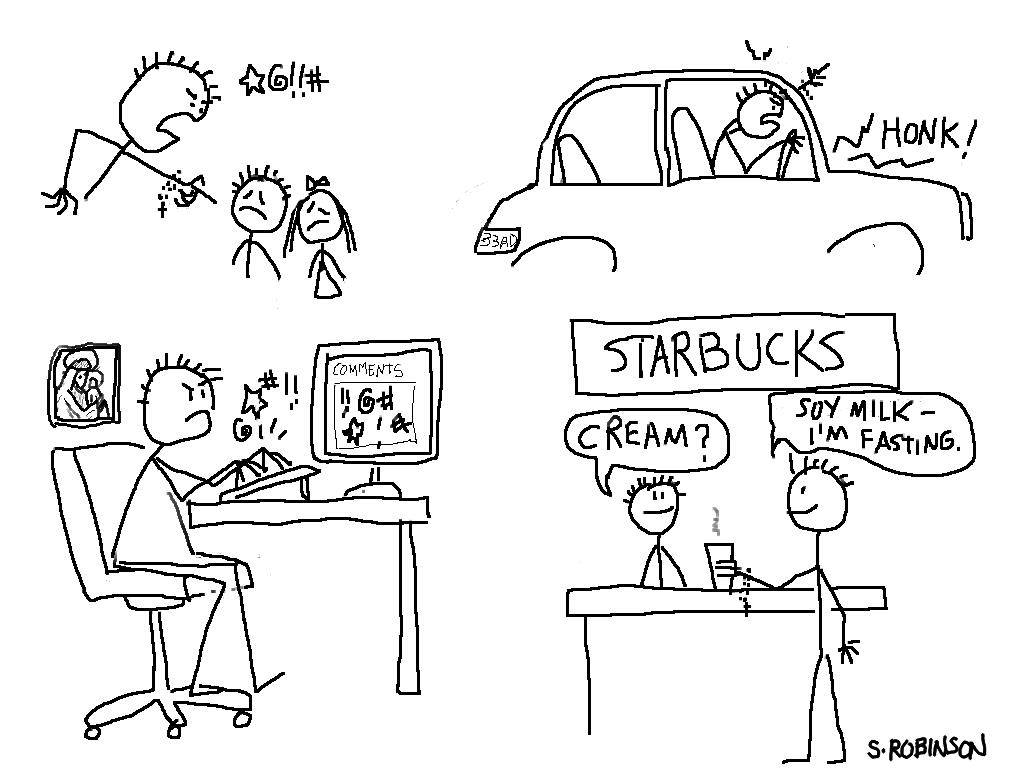
Simply cutting out animal products is not fasting; that is just veganism. For those who are new to fasting, food may be the most visible part of the fast – but in fact abstaining from the finest foods adds fervency to our struggle for increased prayer, almsgiving, and paying attention to our thoughts and words.
Saint Tikhon of Zadonsk wrote: “An excellent faster is he who restrains himself from every impurity, who imposes abstinence on his tongue and restrains it from idle talk, foul language, slander, condemnation, flattery and all manner of evil speaking, who abstains from anger, rage, malice and vengeance and withdraws from every evil.”
When do we fast?
Besides Wednesdays and Fridays, there are short fasts anticipating the Feasts of Saints Peter and Paul and the Dormition of the Theotokos. The longer fasts are Advent – our preparation for the Nativity of Christ – and Great Lent, leading up to the Resurrection Day.
Maria Von Trapp, from The Sound of Music, arrived in the US in the 1940s. She wrote about her surprise that Americans have forgotten about Advent: Advent in America.
Christmas is of course on December 25 on our calendar – which comes a little later, on January 7 on the civil calendar. (Why two calendars?) Forty days before Christmas, on November 28, we will begin the season of anticipation with the fasting season named Advent.
Can I do this? Am I required to do this?
Everyone is welcome to join us in the Advent fast as we anticipate the joyful Nativity of Christ. If you are an inquirer, or this practice is new to you, know that our whole community is struggling according to each one’s strength to accomplish the fast, and nobody is taking notes or evaluating your practice. Perfectly keeping the fast is a goal and not a cause for condemnation. If you and your family are not sure how to begin, by all means speak with one of the priests and we will be happy to help you work out your approach to the fast. Your smallest children should not be required to fast, and if your medical condition dictates what you may or may not eat, then that struggle may already be your fast. As always, the canon is simple but each life is different, so implementing the canon may look different from one person to the next.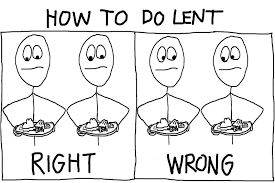
You are invited to enter into the season of the fast according to your strength.
Finally, remember this word from Saint John Chrysostom:
Do you fast?
Give me proof of it by your works.
If you see someone who is poor, take pity on that one.
If you see a friend being honored, do not be envious.
Do not let only your mouth fast, but also the eyes, and the feet,
and the hands and all the member of our bodies.
Let the hands fast, by being free of avarice.
Let the feet fast, by ceasing to run after sin.
Let the eyes fast, by disciplining them not to glare at that which is sinful.
Let the ears by not listening to evil talk and gossip.
Let the mouth fast from foul words and unjust criticism
For what good is it if we abstain from birds and fishes,
but bite and devour our brothers and sisters?
— St. John Chrysostom